
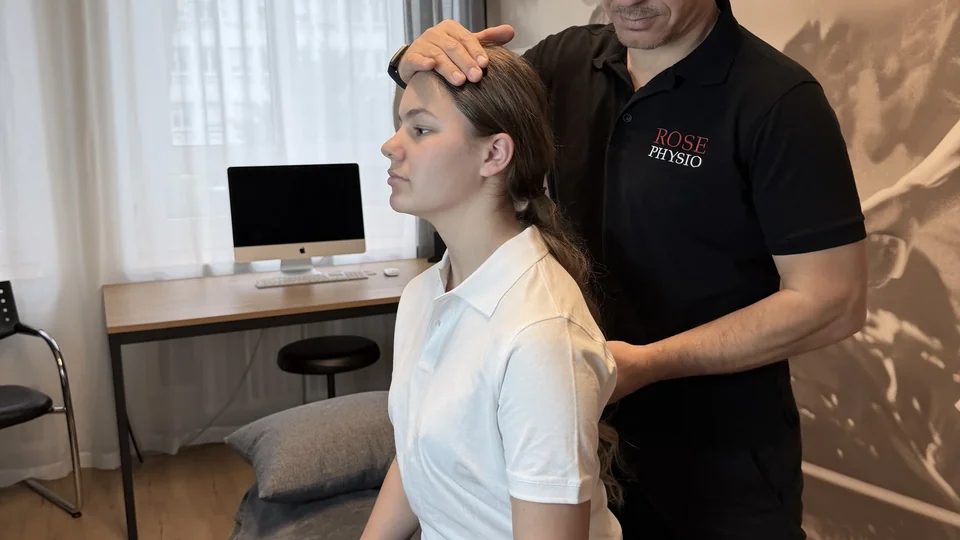
What causes headaches?
Headaches can arise from neck tension, poor posture, jaw joint problems, stress or excessive strain. Limited mobility or irritation of nerve structures may also play a role.
We look closely for triggers and treat the underlying causes to reduce pain and improve quality of life.
How we treat headaches.
-
Assess the connections
We assess the neck, jaw, posture and physical demands to identify the causes of your headaches.
-
Address tension and mobility
Targeted manual techniques and active exercises relieve tension and improve mobility.
-
Reduce symptoms over the long term
Individually tailored therapy gives you greater freedom in everyday life.
Frequently asked questions.
Can headaches originate in the neck?
Yes. Headaches can be associated with problems in the cervical spine and neck muscles. Typical pain starts in the neck or back of the head and may extend to the forehead or temples. In physiotherapy, we assess cervical spine mobility, muscles and capacity for activity to identify possible connections.
What helps with headaches caused by neck tension?
Movement, targeted exercises and improvements in strength and mobility may help with headaches caused by neck tension. Manual techniques may also be used depending on the assessment findings. It is important to address not only tense muscles but also possible triggers such as repetitive loading, lack of movement or limited mobility.
Can physiotherapy help with headaches?
Yes. Physiotherapy may be helpful for certain types of headache, particularly when cervical spine problems, muscular factors or the jaw are involved. Following an individual assessment, we combine active exercises, strength and movement training, and manual techniques as appropriate. The aim is to reduce symptoms and prevent recurring headaches where possible.
What is the difference between tension-type headaches and migraine?
Tension-type headaches are often described as pressing or pulling and frequently affect both sides. Migraine is often more severe, frequently one-sided and throbbing, and may be accompanied by nausea and sensitivity to light or sound. Different headache types can overlap, so frequent, severe or new headaches should be medically assessed.
Can jaw problems or teeth grinding cause headaches?
Yes. Jaw problems, teeth grinding or temporomandibular disorders (TMD) can be associated with head, face and neck pain. Tension in the chewing muscles or restricted jaw movement often occur at the same time. Physiotherapy can assess and treat the jaw joint, chewing muscles and cervical spine together.
When should I have headaches assessed by a doctor?
New, unusually severe or sudden headaches should be assessed by a doctor. This is particularly important with additional symptoms such as paralysis, speech or vision problems, altered consciousness, severe dizziness or fever, or following a head injury. Headaches that are becoming more frequent or have changed significantly should also be medically assessed.