
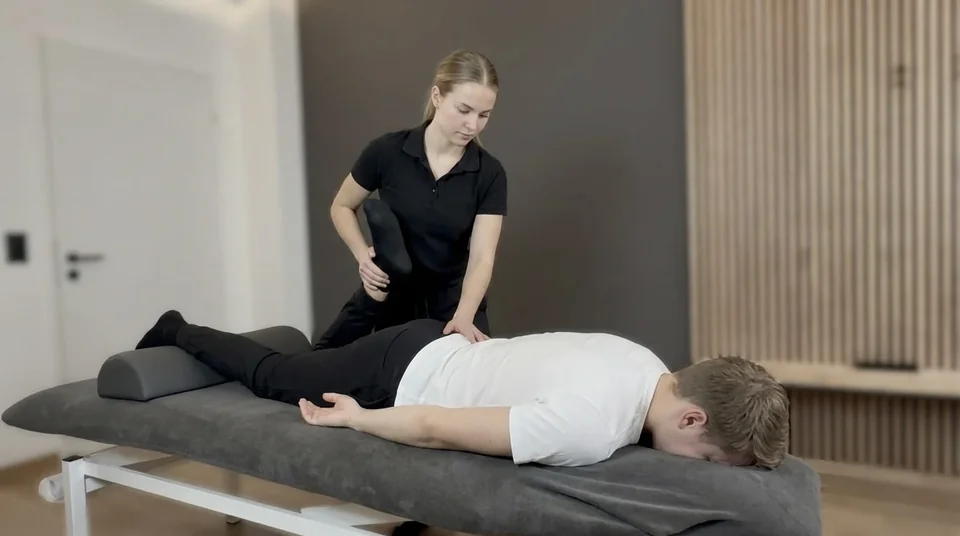
Why meniscus injuries cause symptoms.
A meniscus injury can follow a twisting movement or an accident, but may also be associated with longer-term changes in the knee joint. Pain, swelling and symptoms during twisting or deep knee bending may occur. We assess mobility, strength and knee control, and tailor progression to your symptoms and activity goals.
How we treat meniscus injuries.
-
Assess the knee and its function
We assess mobility, swelling, strength, control and the activities that trigger symptoms.
-
Build stability with a plan
Exercises for the thighs, hips, balance and knee control are adapted to the stage of healing and physical capacity.
-
Support a gradual return
We prepare you for everyday life and sport through a controlled, functional progression of physical demands.
Frequently asked questions.
What helps with a meniscus injury?
Treatment for a meniscus injury depends on the type of injury, symptoms, age and activity requirements. Not every meniscus injury needs surgery. Physiotherapy can systematically build strength, mobility and control of the knee joint.
What are the symptoms of a meniscus tear?
A meniscus tear can cause knee joint pain, swelling and symptoms during twisting or deep knee bending. Sometimes the knee may feel as though it is locking. However, symptoms alone do not always allow a reliable diagnosis.
Can a meniscus tear be treated without surgery?
Yes. Depending on the type and location of the injury and the symptoms, many meniscus problems can initially be treated without surgery. Adapting activity and targeted exercise play an important role.
Which exercises help with a meniscus injury?
Exercises to strengthen thigh and hip muscles, alongside exercises for mobility, balance and knee control, are often used. Selection and progression should be adapted to the stage of healing and symptoms.
Can physiotherapy help with a meniscus tear?
Yes. Physiotherapy can be used both for meniscus injuries treated without surgery and following an operation. The goals are good mobility, muscle strength, knee control and a gradual return to everyday life and sport.
When does a meniscus tear require surgery?
Not every meniscus tear needs surgery. The decision depends, among other factors, on the type and location of the tear, age, symptoms and functional limitations. Persistent locking or certain traumatic injuries may require a surgical assessment.