
What causes neck pain?
Neck pain can restrict your ability to turn your head and extend into the shoulder region. Often, no single cause can be identified. Prolonged repetitive loading, limited movement or stress can influence symptoms. We assess the cervical spine, shoulder girdle and surrounding regions, and work with you on a plan that fits your everyday life.
How we treat neck pain.
-
Understand your symptoms and daily activities
We discuss how your symptoms have developed, assess mobility and capacity for physical activity, and consider possible contributing factors at work, in everyday life and in sport.
-
Tailor movement and exercise
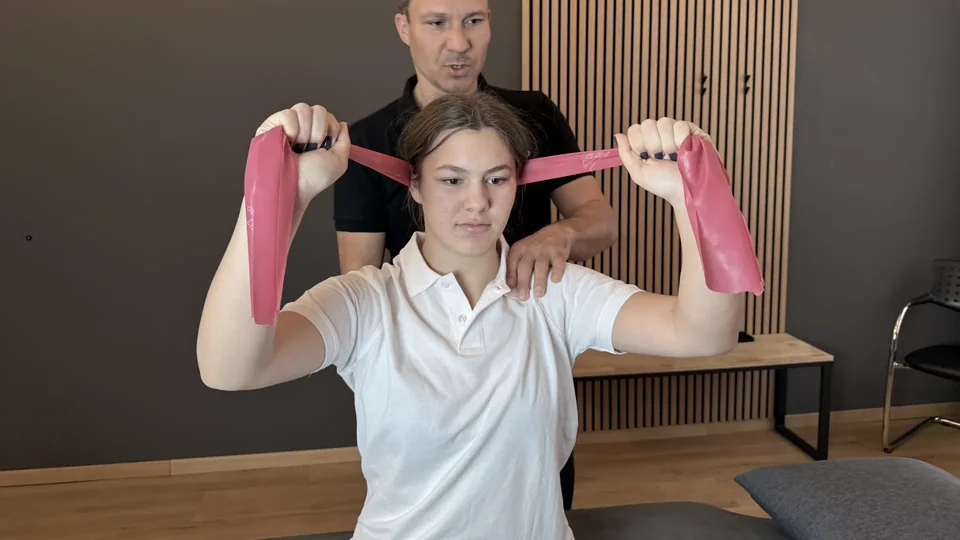
We select suitable mobility and strengthening exercises for the neck and shoulder girdle. Where needed, we complement active treatment with manual techniques.
-
Make movement part of everyday life
Together, we find suitable movement breaks and ways to vary physical demands. A practical exercise programme helps you train independently.
Frequently asked questions.
What can I do myself for neck pain?
For non-specific neck pain, it is usually helpful to keep moving within your own limits. Changing position and taking movement breaks can help interrupt prolonged repetitive loading. Heat may feel soothing. The appropriate approach depends on your symptoms.
Which exercises help with neck pain?
Mobility and strengthening exercises for the neck and shoulder girdle can form part of treatment. We select exercises to match your assessment findings and show you how much to do. There is no single exercise programme that works equally well for all symptoms.
Can computer work affect neck pain?
Long periods without changing position can be associated with neck symptoms. Regular movement and varied working positions are helpful, rather than aiming for one perfect posture. We can also discuss your workstation setup and individual physical demands.
Can neck pain radiate into the arm?
Yes. Symptoms from the cervical spine can radiate into the shoulder or arm. Tingling, numbness or loss of strength may indicate nerve involvement and should be assessed by a doctor.
How long does neck pain last?
Acute non-specific neck pain often improves within days to a few weeks. However, it can recur or persist for longer. Its course and treatment depend on the symptoms, any associated symptoms and your individual situation.
When should I have neck pain assessed by a doctor?
Symptoms following an accident, new or increasing loss of strength, persistent numbness, or problems with balance and walking should be assessed promptly by a doctor. Fever with pronounced neck stiffness, or severe headaches with additional symptoms, require urgent medical help. Persistent or worsening pain should also be examined.