
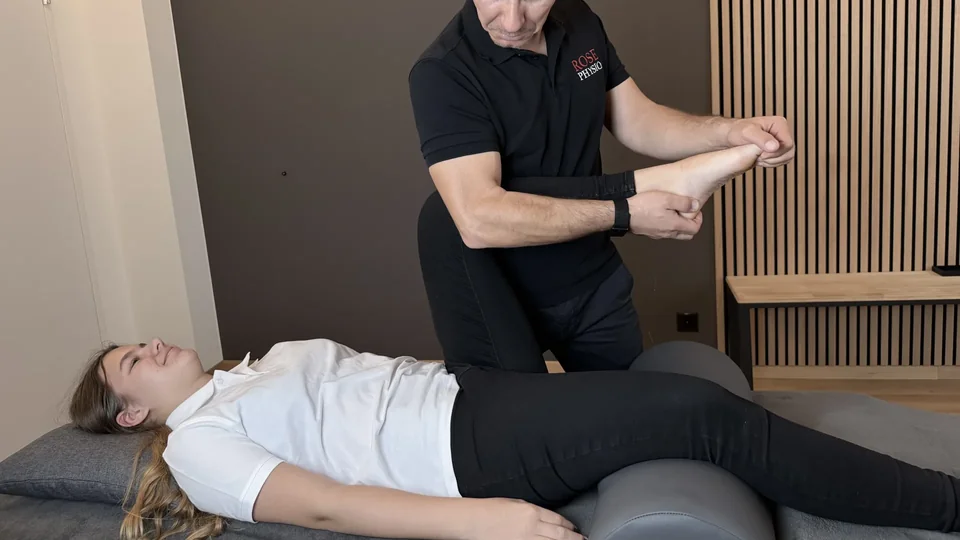
What causes foot and heel pain?
Foot and heel pain can occur when walking, standing for long periods or playing sport. Irritation of the plantar fascia is one possible cause of pain under the heel. Depending on the location of the pain, other tendons, joints or injuries may also be involved. We assess mobility and capacity for physical activity, tailoring treatment to your symptoms and everyday demands.
How we treat foot and heel pain.
-
Assess pain location and physical demands
We assess the foot and ankle and discuss when symptoms occur. We also consider walking distances, training, footwear and changes in physical demands.
-
Tailor activity and exercises
We adapt demanding activities and select suitable exercises for the foot and calf. Depending on the assessment findings, we also work on ankle mobility.
-
Gradually build walking and sport
Together, we plan a tailored return to longer walks, work and sport. We monitor the response to activity and adapt the exercise programme accordingly.
Frequently asked questions.
What can cause pain under the heel?
One possible cause is irritation of the plantar fascia, a strong band of tissue along the sole of the foot. However, heel pain can also have other causes. The precise location, development of symptoms and an examination help clarify the problem.
Why does my heel hurt during the first steps in the morning?
Pain when first moving after getting up or sitting for a long time can occur with plantar fascia problems. This pattern alone is not enough for a diagnosis. We consider other symptoms and triggering activities.
Which exercises may be suitable for foot and heel pain?
Depending on the cause, exercises for the foot and calf and for ankle mobility may be helpful. Adapted stretching exercises may also be suitable for plantar fascia problems. We tailor exercise selection and volume to your physical capacity.
Are insoles necessary for heel pain?
Not always. Suitable shoes, heel cushions or insoles may provide relief in individual cases. Whether these aids are helpful depends on the symptoms. Where appropriate, they are combined with adapted activity and suitable exercises.
Does a heel spur automatically mean it is causing the pain?
No. A heel spur can also occur in people without symptoms. This finding therefore does not automatically explain the pain. Your symptoms and the clinical examination are what matter.
When should I have foot or heel pain assessed by a doctor?
Severe pain after an injury, a deformity or an inability to bear weight on the foot require urgent medical assessment. Persistent tingling, numbness, and worsening or recurring symptoms should also be examined. People with diabetes should have new foot symptoms assessed early by a doctor.