
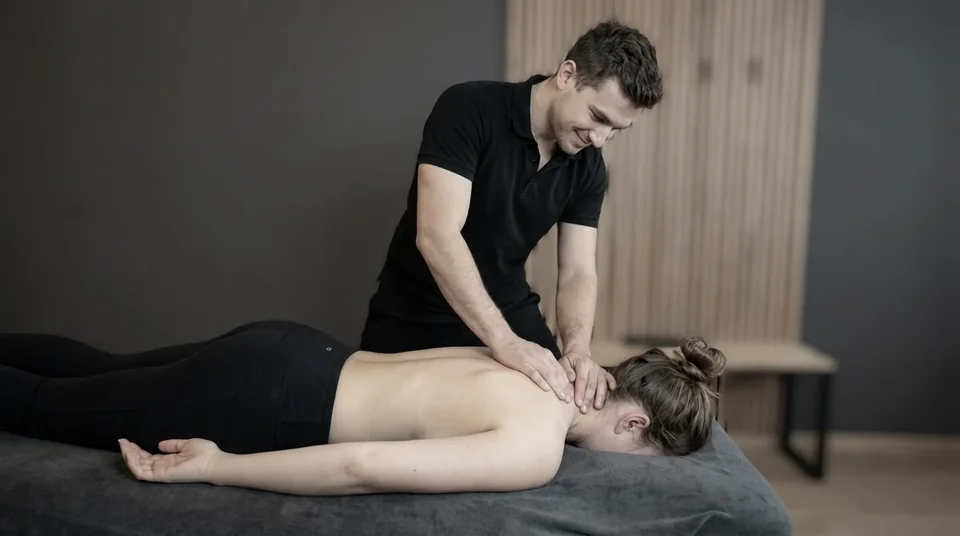
Why a frozen shoulder causes symptoms.
With a frozen shoulder, also known as adhesive capsulitis, shoulder pain and restricted movement often increase gradually. Lifting the arm and external rotation may be particularly affected; night pain is also possible. Treatment is guided by the stage of the condition, symptoms and available mobility.
How we treat a frozen shoulder.
-
Assess the stage and mobility
We assess active and passive shoulder mobility and consider the pattern of pain and current stage of the condition.
-
Tailor movement appropriately
Individually adapted mobility exercises, followed by increasing strengthening exercises, support shoulder function.
-
Build progress patiently
We adapt physical demands as the condition progresses and support what is often a longer journey back to everyday life and activity.
Frequently asked questions.
What helps with a frozen shoulder?
For a frozen shoulder, also known as adhesive capsulitis, treatment depends on the stage of the condition and symptoms. Adapted movement and physiotherapy can help gradually restore function and mobility.
What are the symptoms of a frozen shoulder?
Typical symptoms include increasing shoulder pain and a marked restriction of active and passive mobility. External rotation and lifting the arm are often particularly restricted. Night pain may also occur.
Which exercises help with a frozen shoulder?
Individually tailored mobility exercises, followed by increasing strengthening exercises, are particularly suitable. Aggressive stretching is not automatically better. Intensity should be adapted to pain, mobility and the stage of the condition.
Can physiotherapy help with a frozen shoulder?
Yes. Physiotherapy can help gradually rebuild mobility and function in a frozen shoulder, and adapt physical demands to each stage. Its course often requires patience.
How long does a frozen shoulder last?
A frozen shoulder can last for many months. Duration and severity vary considerably between people. Mobility often improves gradually, although the overall course may take longer.
What should I avoid with a frozen shoulder?
Very aggressive exercises or exercises that repeatedly cause severe pain are not automatically helpful. Movement should be individually tailored. At the same time, complete immobilisation of the shoulder is generally not the goal either.