
What causes shoulder pain?
Shoulder pain may occur when lifting your arm, getting dressed, working or playing sport. Tendons and bursae around the shoulder are often involved. Shoulder stiffness, changes in the joint or symptoms originating in the neck may also play a role. We assess mobility, strength and triggering activities to tailor treatment to your symptoms and goals.
How we treat shoulder pain.
-
Assess movement and physical demands
We discuss your symptoms and assess the shoulder, shoulder girdle and, where appropriate, the neck. We also consider the demands of everyday life, work and sport.
-
Build mobility and strength
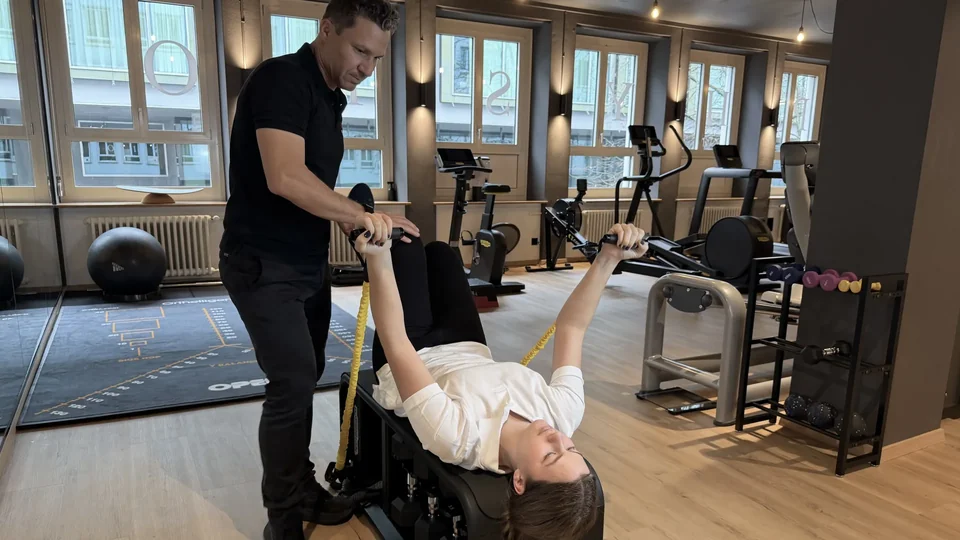
We work on mobility and strengthen the shoulder and shoulder blade muscles with individually tailored exercises. Complementary manual techniques may be used depending on the assessment findings.
-
Return to everyday life and sport
We temporarily adapt demanding activities and increase the demands gradually. An exercise programme helps you continue treatment independently.
Frequently asked questions.
What helps with shoulder pain?
This depends on the cause. Adapted movement and a gradual increase in activity are often helpful. Activities that significantly worsen symptoms are temporarily adapted. The shoulder should not simply be immobilised in every case.
Which exercises are suitable for shoulder pain?
Depending on the assessment findings, mobility exercises and exercises to strengthen the shoulder and shoulder blade muscles may be suitable. Selection, resistance and volume depend on your capacity for physical activity. We show you how to perform them and adapt the exercises as you progress.
What does shoulder impingement mean?
This term often describes pain beneath the roof of the shoulder, particularly when lifting the arm. The term subacromial pain syndrome is also used today. The label alone does not fully explain the symptoms; the examination, symptoms and capacity for physical activity are what matter.
Is shoulder pain always a frozen shoulder?
No. A frozen shoulder is one possible cause and involves a pronounced restriction in shoulder mobility. Other symptoms may, for example, involve tendons or bursae. An examination helps distinguish these situations.
Why does my shoulder hurt when lying down?
With certain shoulder conditions, lying on the affected side may increase pain. A different sleeping position or support for the arm may feel more comfortable. Persistent or worsening night pain should be examined.
When should I have shoulder pain assessed by a doctor?
Sudden severe pain, visible deformity, marked swelling or an inability to move the arm require urgent medical assessment. This also applies to symptoms following an accident, persistent numbness or fever. Worsening or prolonged symptoms should also be examined.