
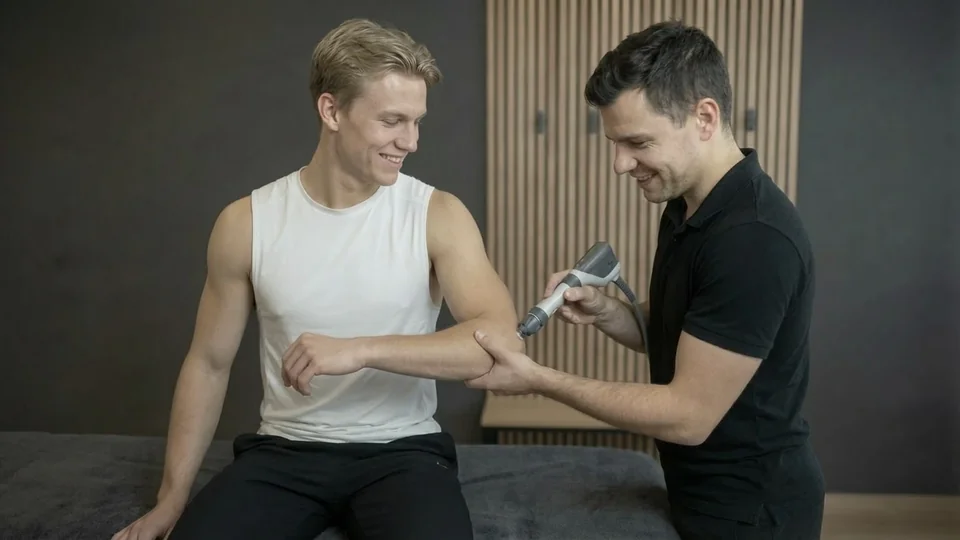
What causes tennis elbow?
Tennis elbow often develops when the demands on the forearm and wrist exceed the current capacity of the involved structures. Symptoms can occur during gripping, lifting, work or sport and may persist for a long time. We assess triggering activities and rebuild strength and physical capacity in a controlled way.
How we treat tennis elbow.
-
Assess physical demands carefully
We assess the forearm, wrist and movements at work, in everyday life or in sport that trigger symptoms.
-
Build strength progressively
Targeted strengthening exercises for the wrist and forearm are progressed according to symptoms and physical abilities.
-
Restore activity safely
We plan a gradual return to gripping, lifting, work and sport without prolonged complete rest.
Frequently asked questions.
What helps with tennis elbow?
Appropriate management of physical demands is particularly important for tennis elbow. Targeted strength training for the forearm and wrist can form part of treatment. Complete rest is usually not the long-term goal.
Which exercises help with tennis elbow?
Progressive strengthening exercises for the wrist and forearm muscles are often used. The shoulder and entire upper limb may also be included in training. Physical demands are increased according to symptoms and abilities.
How long does tennis elbow last?
Tennis elbow can be persistent and cause symptoms for several weeks or months. Its course varies from person to person. Gradual adjustment of physical demands and consistent exercise are often more important than short-term passive treatments.
Can physiotherapy help with tennis elbow?
Yes. Physiotherapy can help rebuild arm strength and capacity in tennis elbow, also known as lateral epicondylalgia. Managing physical demands and targeted exercises are the main focus.
Should I rest or move with tennis elbow?
A temporary reduction in activities that cause significant pain may be helpful. However, complete and prolonged rest is usually not the goal. Physical demands should be rebuilt gradually and in a controlled way.
When should tennis elbow be assessed by a doctor?
Severe pain after an injury, marked loss of strength, neurological symptoms or persistent symptoms should be assessed by a doctor. Other conditions can also cause pain on the outside of the elbow.