
What causes knee pain?
Knee pain may occur when climbing stairs, running, getting up or playing sport. Excessive strain, symptoms around the kneecap, tendon irritation, injuries or osteoarthritis may be involved. Pain does not always mean that the joint is damaged. We discuss your symptoms, assess mobility, strength and capacity for physical activity, and consider the hip and foot where appropriate. We use these findings to develop a treatment plan that fits your goals in everyday life and sport.
How we treat knee pain.
-
Assess symptoms and physical demands
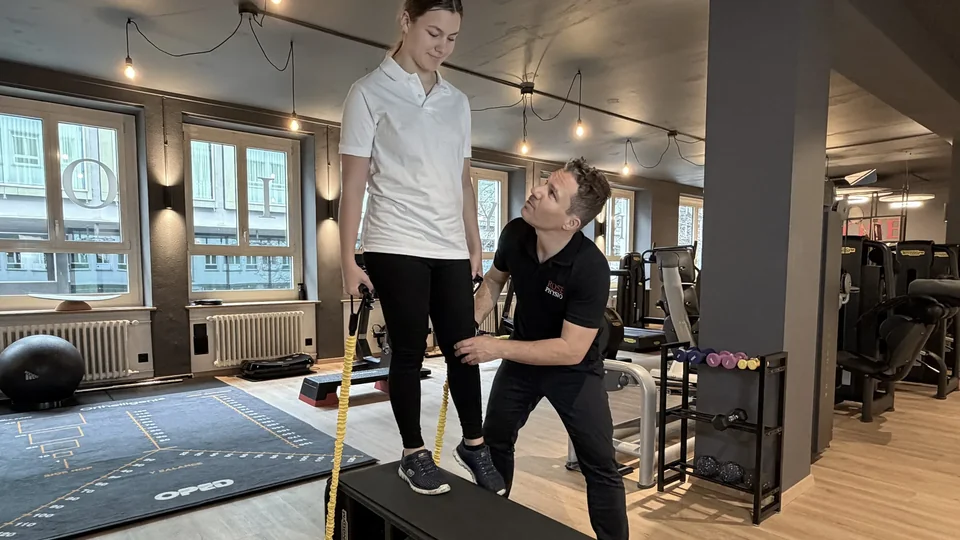
We discuss how your symptoms have developed and assess mobility, strength and stability. We also look at movements such as walking, climbing stairs and squatting, alongside physical demands in everyday life and sport.
-
Build strength and control
We strengthen the knee, thigh and hip muscles with individually tailored exercises. We practise controlled movements and adapt resistance and volume to your current capacity.
-
Return to everyday life and sport
Together, we temporarily adapt demanding activities and increase the demands gradually. A home exercise programme helps you build lasting strength and movement habits.
Frequently asked questions.
What can I do myself for knee pain?
When symptoms first appear, it may be helpful to reduce activities that cause significant pain. Gentle cooling may feel soothing if there is swelling. The appropriate amount of movement depends on the cause. Severe or worsening symptoms should be examined.
Which exercises help with knee pain?
This depends on the assessment findings. Exercises for the knee, thigh and hip muscles may help with pain at the front of the knee. We select suitable exercises and show you how to perform them in a controlled way. Intensity and volume are adapted; exercise should not cause severe pain.
Why does my knee hurt when climbing stairs?
Climbing stairs places demands on the area around the kneecap, among other structures. Pain during this activity may, for example, be associated with anterior knee pain. Other causes are also possible. The location of the pain alone is not enough to reliably identify the cause.
Can I continue playing sport with knee pain?
This depends on the cause and your capacity for physical activity. With symptoms caused by excessive strain, pain-provoking activities are often temporarily adapted. We discuss suitable alternatives and plan a gradual return. After an injury, or if the knee is swollen, locks or gives way, it should be assessed first.
Is knee pain always osteoarthritis?
No. Excessive strain, tendon problems or injuries can also cause knee pain. With knee osteoarthritis, adapted movement and targeted exercise can form part of treatment. You can find further information on our osteoarthritis page.
When should I have knee pain assessed by a doctor?
Very severe pain, pronounced swelling, visible deformity, or an inability to move or bear weight on the knee require urgent medical assessment. This also applies if the knee locks or repeatedly gives way. A hot, red knee accompanied by fever requires urgent medical help. Persistent or worsening symptoms should also be examined.